Topics at the Allianz Center for Technology:
Greater safety in bobsleigh: ducking your head and holding on tight is not enough
For over a year, AZT has been working with the German Bobsleigh and Sled Association (BSD) and other partners to develop solutions for greater safety in bobsleighing.
February 2026
This project, which was initially unusual for AZT, is closely linked to Allianz's involvement in the Olympic Games. The idea and motivation were not only to engage in traditional sponsorship, but also to actively contribute to safety in bobsleighing. The starting point was the recurring accidents, some of which had serious consequences for the athletes, most recently the serious accident involving Swiss brakeman Sandro Michel on the track in Altenberg, Saxony.
The AZT was asked to transfer its expertise in the field of automotive safety to bobsleighing. With the support of the Technical University of Munich (TUM), a risk analysis of the individual positions in the bobsleigh was carried out as part of the project. This showed that the two front athletes are primarily at risk from head impacts. The two rear athletes are at high risk of being thrown out of the bobsleigh in the event of a crash. Over the following months, solutions were sought for these individual risks in various phases, from brainstorming and initial technical concepts to functioning prototypes, which were tested in iterative development steps together with active athletes on the bobsleigh track.
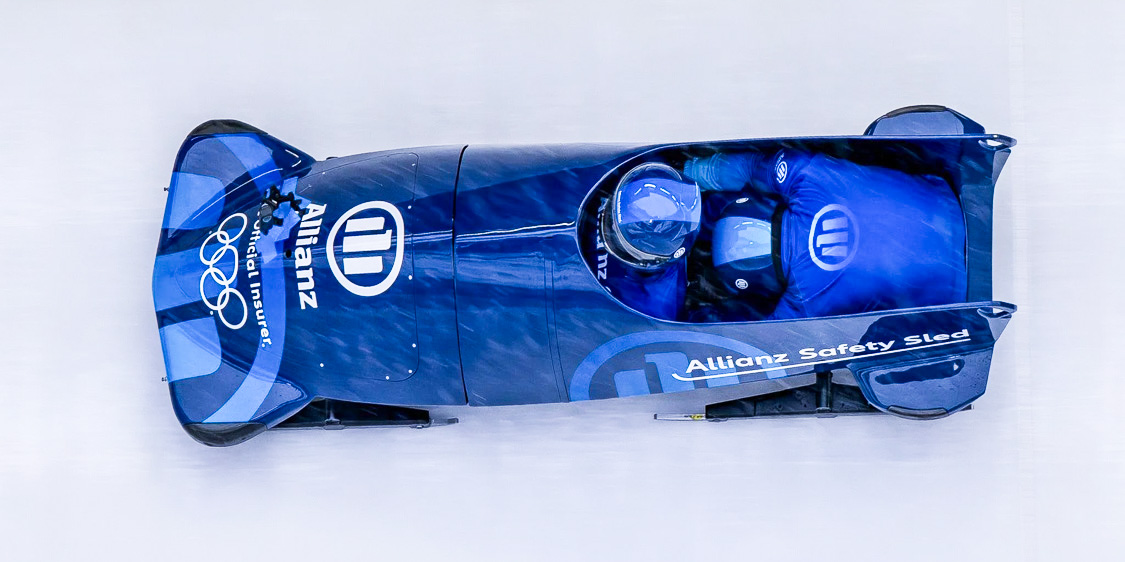
The current concept, which was presented on February 11, 2026, at the Winter Olympics by the German Bobsleigh and Sled Association (BSD) together with experts from the Allianz Center for Technology (AZT) in Cortina d'Ampezzo, consists of two components. The Allianz Safety Sled is equipped with a Head Impact Protection (HIP) system to prevent head injuries to athletes and the Passive Athlete Safety System (PASS), a harness system to secure the brakeman and second pusher in the bobsled.
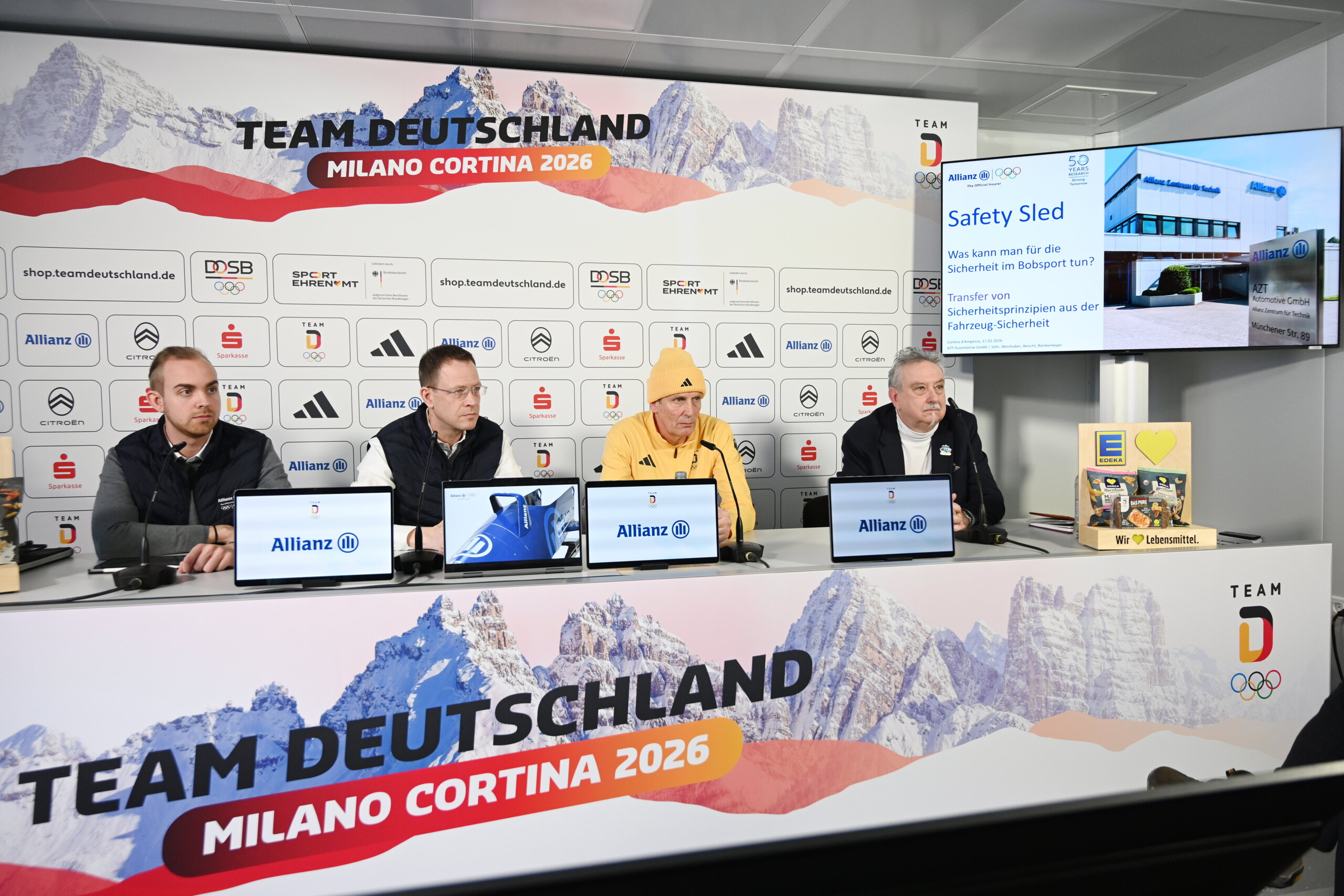
From left to right: Markus Beischl (development engineer at AZT), Christian Sahr (managing director of AZT), Thomas Schwab (CEO of BSD), and Christian Weishuber (corporate communications at Allianz Versicherungs-AG) at the press conference in Cortina d'Ampezzo.
HIP system for better head protection
Similar to a convertible, where the windshield frame and rear roll bar create a safety zone without a roof structure, the open design of the bobsled requires a front and rear structure that can keep forces away from the athletes. The new safety cell in the bobsled is designed to prevent direct impact to the occupants. The head is particularly at risk, as it cannot be adequately protected in the event of a crash. To this end, the HIP (Head Impact Protection) system was developed for the front of the sled to directly protect the driver's head. In a further step, this protection will be extended to the pushers by means of raised push bars at the rear, creating more safe space for all occupants.
“For head protection, it was crucial that structural integration into existing bobsleds was easy to achieve in order to ensure feasibility for all international teams. Therefore, a largely standardizable design had to be found. In addition, the athletes' mobility must not be impeded during the time-critical entry into the bobsled,” said Christian Sahr, Head of the Allianz Center for Technology (AZT).
This development work is being carried out by the Institute for Research and Development of Sports Equipment (FES) in Berlin, which traditionally manufactures the bobsleds for the BSD and is therefore ideally placed to contribute its knowledge of the structural requirements of bobsleds.
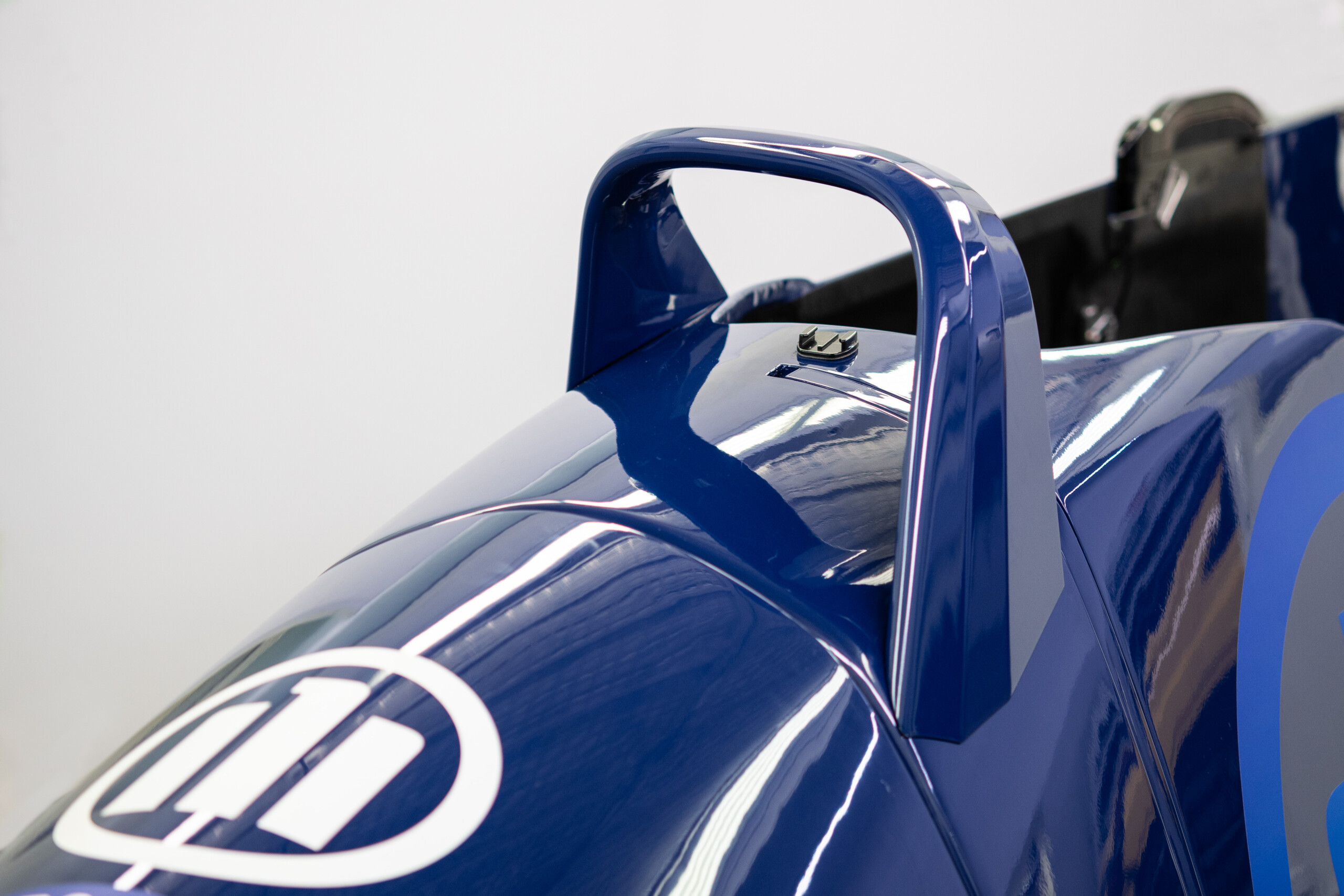
The Head Impact Protector (HIP) system
External video
This video is loaded in a YouTube player. This means that Google collects information about your use of the information provided and uses it for analysis and marketing purposes. However, if you would still like to view this video, you must change the cookie settings.
Open cookie settings
PASS belt systems protect athletes in positions 3 and 4.
Position 4 in the bobsled is particularly at risk in the event of a crash due to its unfavorable body posture under these atypical loads. The holistic safety concept of the BSD and Allianz therefore stipulates that the two rear athletes in the sled should be secured as a priority. The occupant restraint system for this was developed at the AZT. The most vulnerable position in the event of a crash is position 4 in the bobsled, the brakeman. He is in a vulnerable situation because he can only hold on to something very far away from his center of gravity. This means that he can be lifted out of the bobsled in the event of a crash. To prevent this, a restraint system close to the center of gravity is necessary.
"We were able to test a few concepts with the bobsled team Illmann at the Altenberg ice track. A belt system proved to be the best solution for the brakeman, in which the athlete jumps into an already open belt loop that then automatically wraps around his pelvis. In the event of a crash, the athlete can thus be held in the sled. This prevents contact with the ice and associated injuries, such as to the spine, or even burns caused by rubbing against the ice at high speed," said Markus Beischl, Engineer for Sports Equipment and Materials at the Allianz Center for Technology (AZT).
Furthermore, tests are currently being carried out to determine whether and how an additional wrist restraint can keep the brakeman's upper body inside the safety cell in the event of unconsciousness.
Securing the athlete in position 3 is more challenging due to the limited space available. Here, the AZT has developed a coupling system using a belt worn around the pelvis that attaches to an automatic locking system fixed to the chassis structure behind the athlete. The concept is currently being tested with active athletes.
The athlete in position 2 is protected by the HIP system and, due to their seating position, has a very low risk of being thrown out of the sled.
The pilot is adequately secured against falling out of the sled due to their seating position.
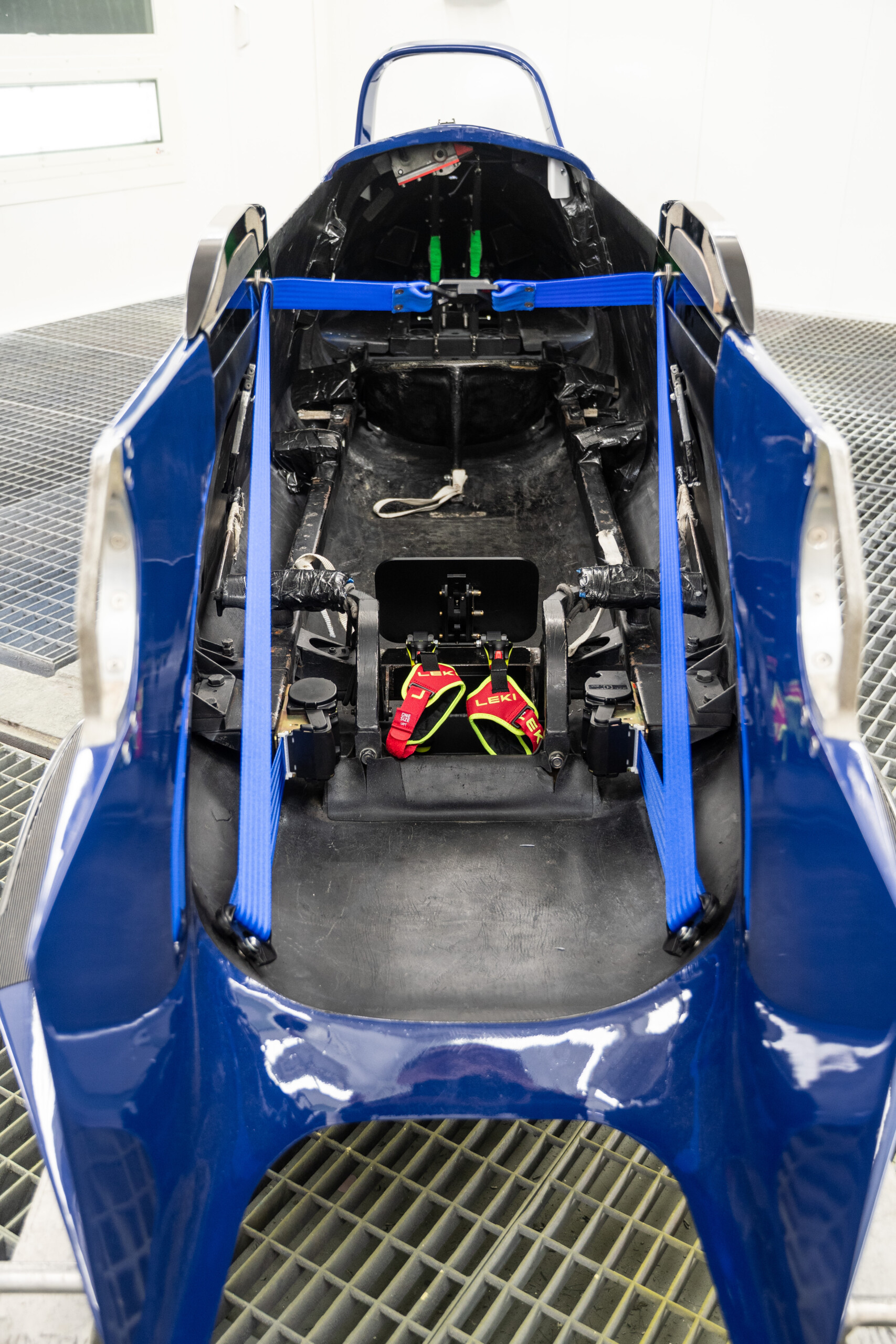
The Passive Athlete Safety System (PASS)
External video
This video is loaded in a YouTube player. This means that Google collects information about your use of the information provided and uses it for analysis and marketing purposes. However, if you would still like to view this video, you must change the cookie settings.
Open cookie settings
Quantum leap for safety in bobsleigh
“Bobsleigh is the Formula 1 of winter sports, and as the fastest winter sport, the dangers remain very real. While successful work has been done on the safety of the tracks in recent years, we will significantly increase the safety of athletes in bobsleigh in the future with the HIP and PASS systems,” said Thomas Schwab, CEO of the BSD. “Both solutions represent a quantum leap for safety in bobsleigh. We developed them together with the Allianz Center for Technology (AZT). The systems are part of a holistic safety concept. This includes head protection, preventing athletes from being thrown out of the sled after a crash, and improving protective clothing."
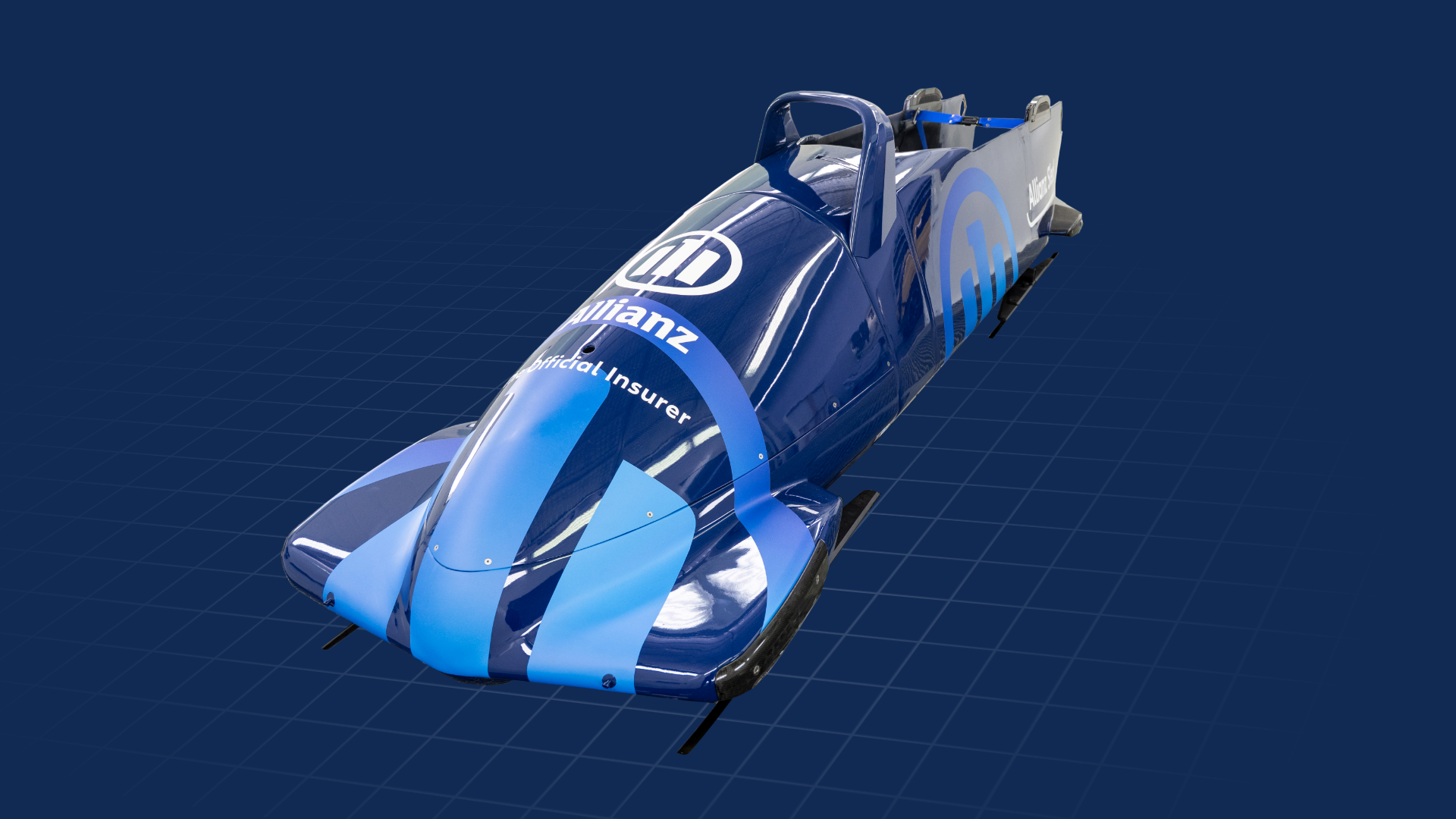
The Allianz Safety Sled with the new HIP and PASS safety features
What happens next?
The two concepts will be discussed with the sports and equipment commissions of the International Bobsleigh & Skeleton Federation (IBSF) in the near future. It is important that the solutions presented are designed in collaboration with experts and sports equipment manufacturers in such a way that they can be easily and smoothly retrofitted to different bobsled models.
“The goal would be to have both systems in use by mid-2028 at the latest,” said Thomas Schwab.
For AZT, this exciting project represents another milestone in its commitment to greater safety – whether on roads, racetracks (as in a similar project with Formula 1 at the time) or now in the ice channel. Technical expertise can be transferred to various applications and can be beneficial in a wide range of areas. We look forward to seeing the developments presented here being used on a large scale soon and helping to prevent accidents in the future.
But for now, we wish the bobsleigh and luge athletes a successful and accident-free Olympic Games!
The press release on the presentation of the HIP and PASS safety systems is available here: Greater Safety in Bobsleigh


