Topics at the Allianz Center for Technology:
14th Allianz Motor Day
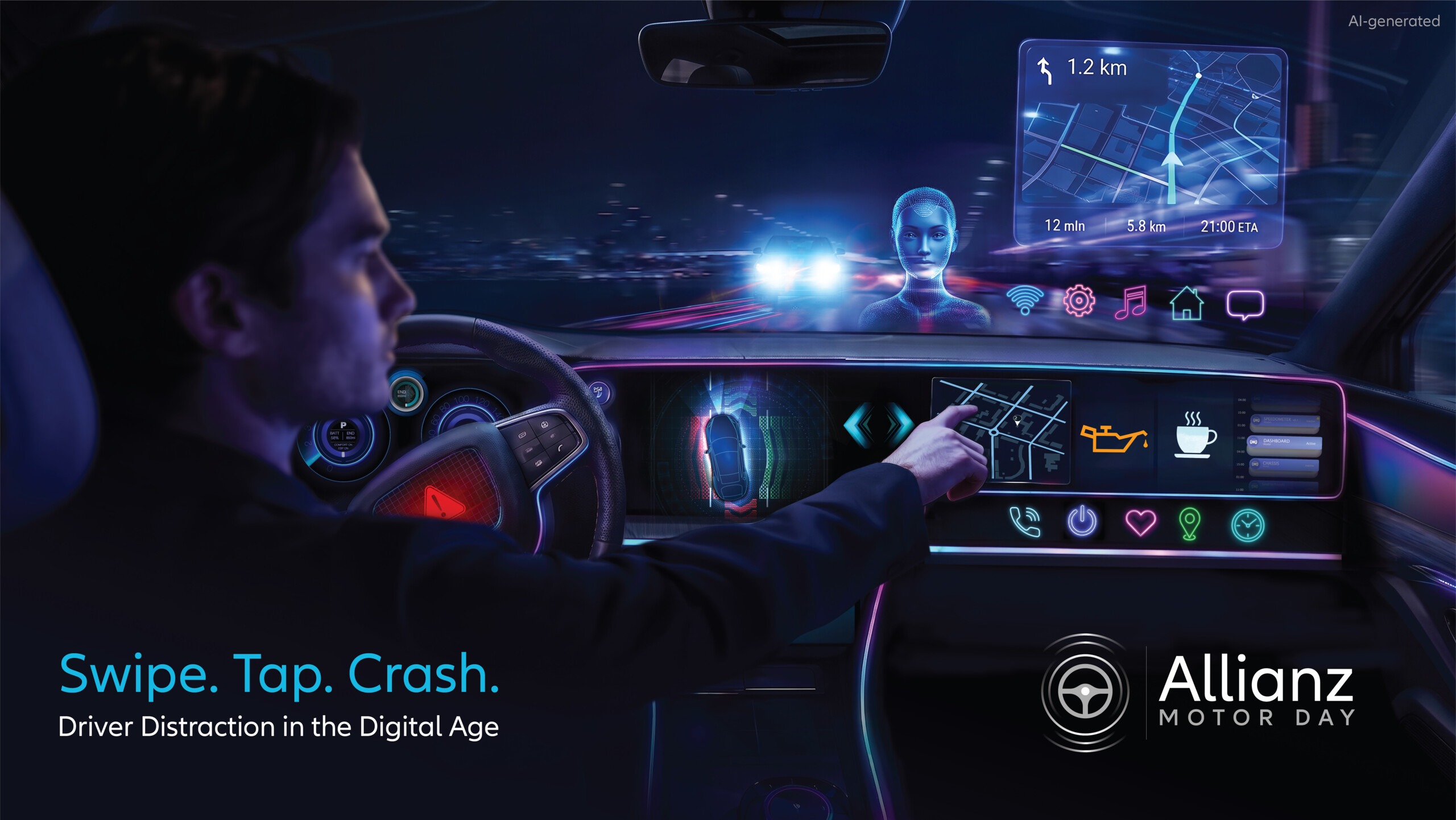
SWIPE. TAP. CRASH. – Driver Distraction in the Digital Car. For the fourth time already, the AZT has investigated the topic of driver distraction – but this time on a far more comprehensive and international scale. The results were presented to the press at the 14th Allianz Motor Day.
October 2026
The fact that distraction is one of the greatest risks in road traffic has long been known. However, the true extent of its actual impact has often been underestimated and never been concretely quantified. This is precisely why this year's Allianz Motor Day was held under the motto "SWIPE. TAP. CRASH. – Driver Distraction in the Digital Car," focusing specifically on driver distraction in increasingly digital vehicles.
The extensive research program conducted by the AZT on the occasion of Allianz Motor Day reveals that distraction occurs far more frequently than accident statistics would suggest distraction is involved in every third traffic accident – either as a direct trigger or as a contributing factor. The design of the in-vehicle touchscreen interface plays a particularly important role in determining how long a driver's eyes are off the road. Glances away from the road lasting more than two seconds significantly increase the risk of an accident – the problem is not the touchscreen itself, but rather how functions are implemented in the cockpit.
Dr. Christian Sahr, Managing Director AZT Allianz Center for Technology, calls for: "Safe vehicle operation requires binding recommendations on which functions should be controlled via physical switches and which via touchscreen. At the same time, scientific findings on human-machine interaction should be consistently applied to design touchscreen interfaces in a way that minimizes driver distraction from the traffic situation."
The results of an international survey conducted in nine countries also confirm the relevance of this topic: 79% of respondents stated that in-car technology has worsened distraction in recent years, and 53% rate the general risk of distraction as high or very high. 73 percent of drivers who caused an accident in the past three years consider distraction a definite or possible cause. Accordingly, there is a strong desire for simpler operation: around two-thirds of respondents (65 percent) would prefer conventional controls such as buttons or rotary knobs for certain functions, rather than touchscreen-only operation. Together with experts from academia, industry, and politics in attendance, the research findings and further facets of the topic of distraction were discussed, and three key areas for action to reduce distraction in the digital car were identified:
1, Vehicle manufacturers: Relevant functions must be easily accessible and operable at all times – for example, also via physical switches.
Vehicle manufacturers must consistently align their operating concepts with the demands of real-world driving conditions. Safety-critical functions such as windshield wipers, turn signals, low beam and high beam headlights, hazard warning lights, as well as windshield heating and defrosting must be quickly and intuitively accessible. Controls should remain permanently available, either through physical controls or through clearly defined, constantly accessible areas on the touchscreen. This reduces search time, ensures the driver's eyes stay on the road, and makes it easier to operate unfamiliar vehicles. In Europe, Euro NCAP already rewards designs that provide direct access to important functions rather than hiding them in menus.
2. Regulation and enforcement must keep pace with digitalization.
Regulatory and enforcement authorities should address the issue of distraction systematically, starting with standardized data collection. Effective regulation, enforcement, and technologies for monitoring distraction can help prevent risky behaviour, improve understanding of the problem, and reduce accidents caused by distraction. As vehicles become increasingly digital, legal frameworks and enforcement measures must also evolve to account for new causes of distraction.
3. Drivers bear a key responsibility.
Despite all technological support, driver attention remains the decisive safety factor. 87 percent of respondents in Germany see the primary responsibility for avoiding distraction as their own. Driver assistance systems can provide support but cannot replace the driver. This makes education, driver training, and effective in-vehicle alerts even more important in order to sustainably strengthen drivers' awareness of the risks of distraction.
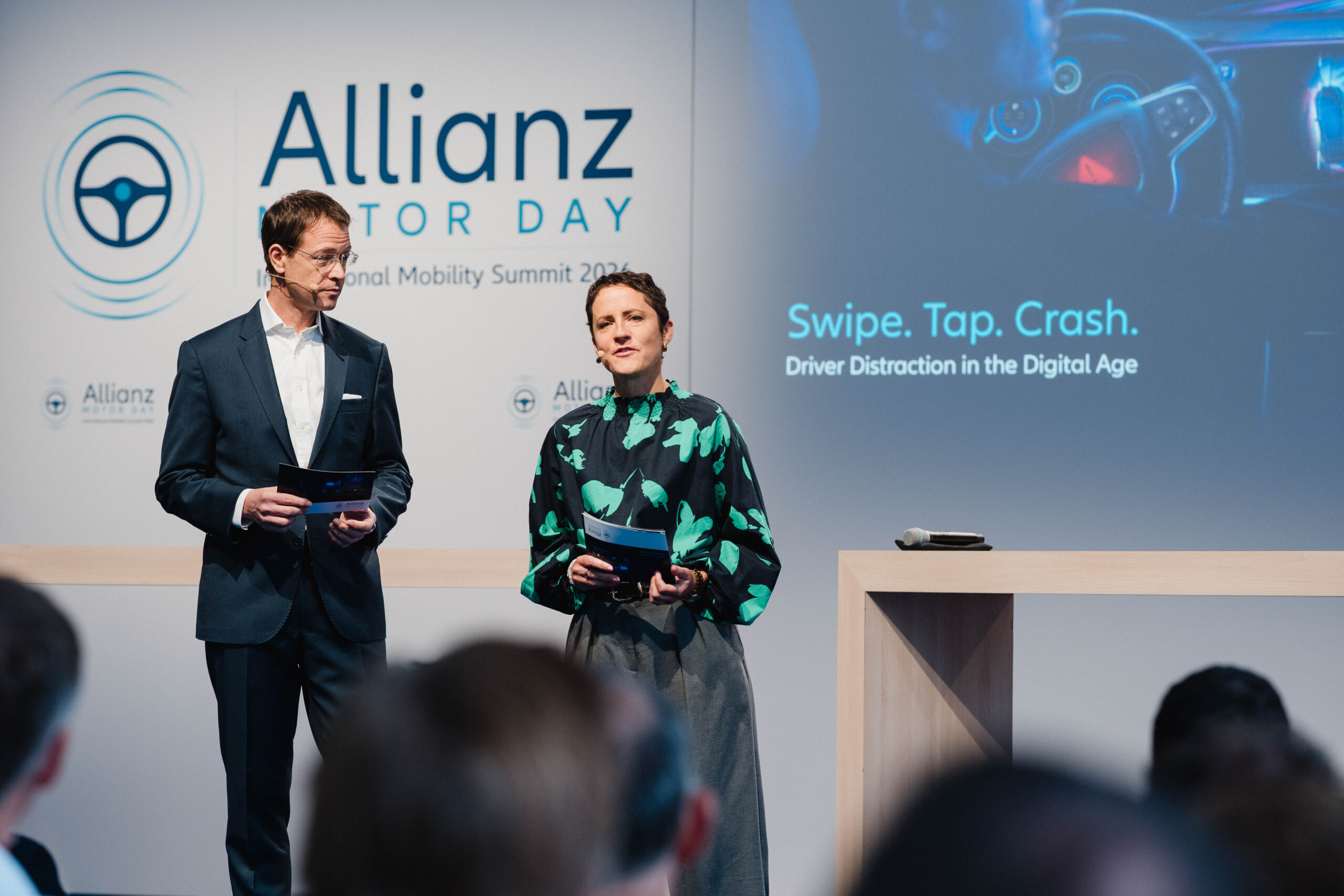
Dr. Christian Sahr (Managing Director AZT Allianz Center for Technology) and Erin Baker (Moderator) open the 14th Allianz Motor Day.
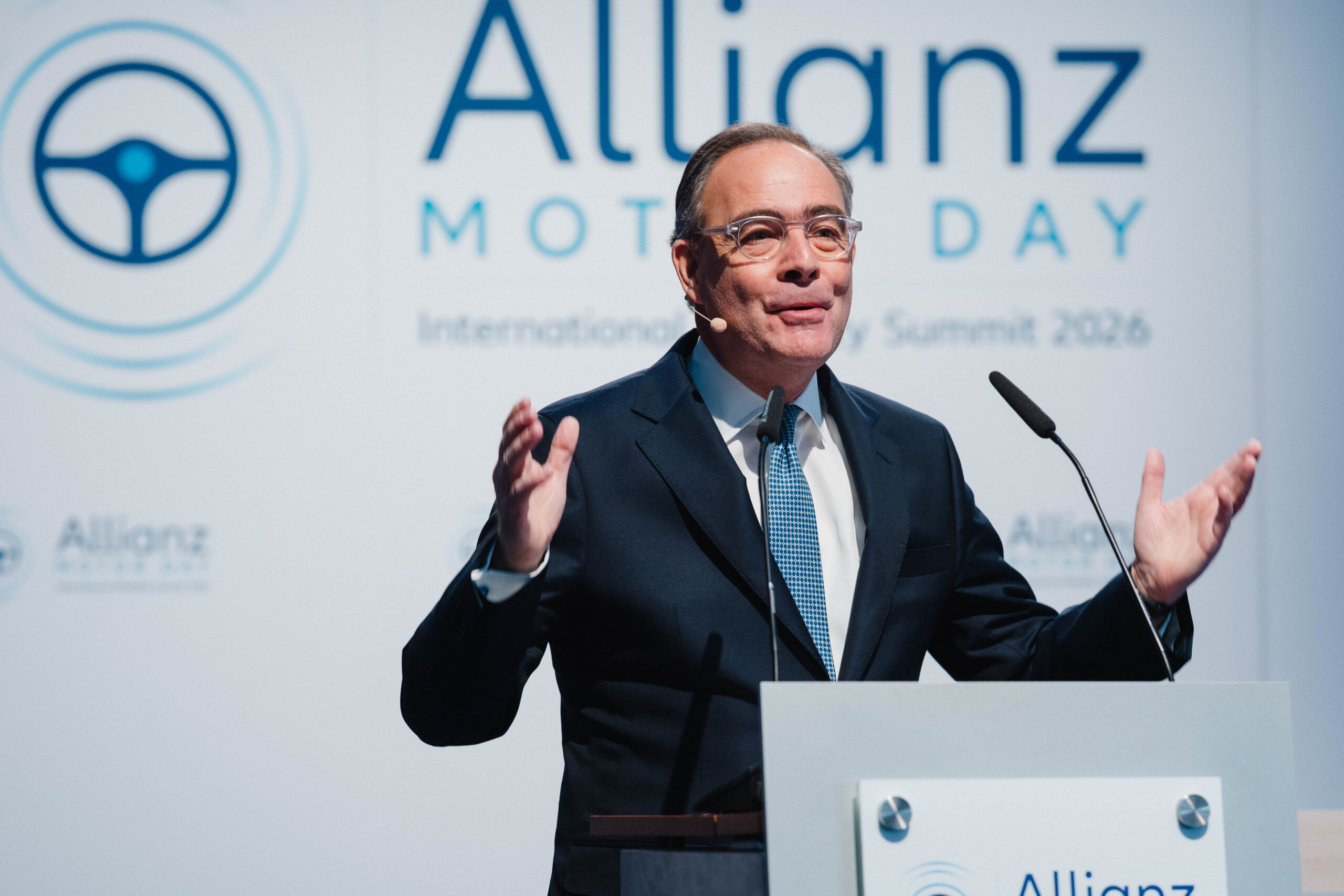
Keynote speech by Dr. Klaus-Peter Röhler (Member of the Board of Management of Allianz SE).
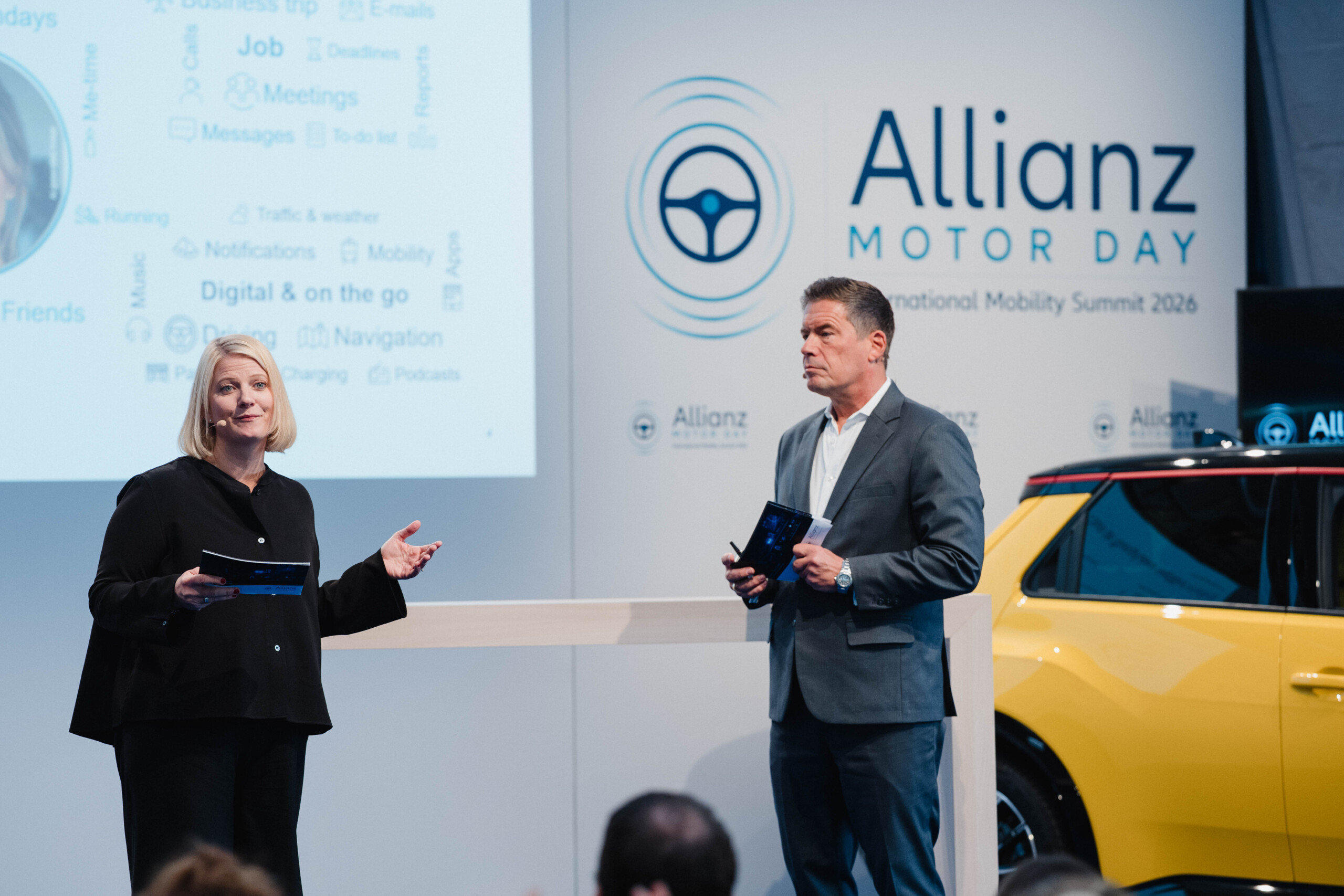
Dr. Lucie Bakker (Chief Claims Officer, Allianz Versicherungs-AG) and Frank Sommerfeld (CEO, Allianz Versicherungs-AG) present on the topic of distraction in the digital car.
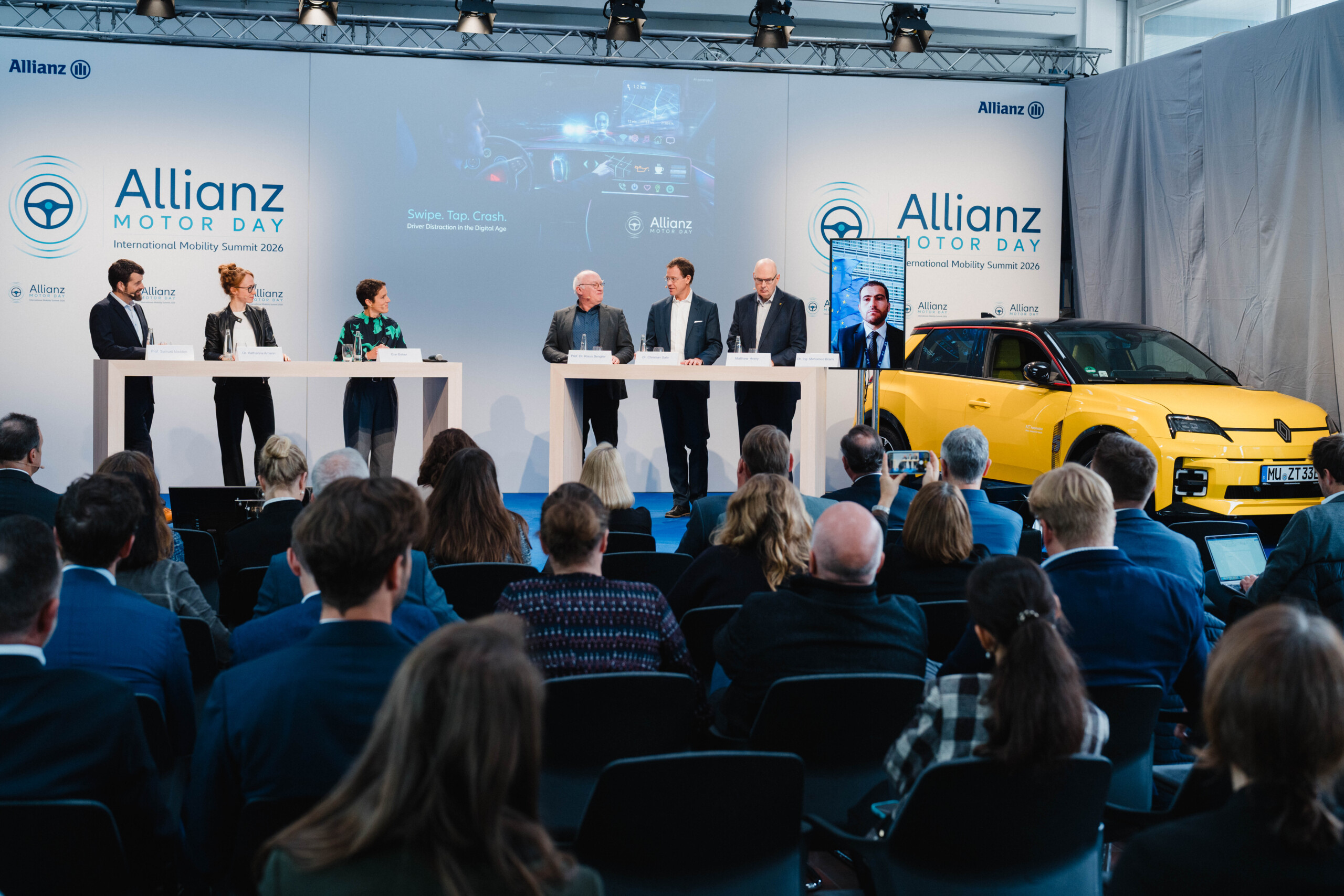
Panel discussion (from left to right): Prof. Samuel Madden (Co-Founder and Chief Scientist, Cambridge Mobile Telematics (CMT), Professor at Massachusetts Institute of Technology (MIT)), Dr. Katharina Amann (Director Motor Claims Germany, Allianz Versicherungs-AG), Erin Baker (Moderator), Prof. Dr. Klaus Bengler (Professor at Technical University of Munich (TUM), Leading Authority for Human-Machine Interaction (HMI)), Dr. Christian Sahr (Managing Director, AZT), Matthew Avery (Director of Strategic Development, Euro NCAP), Dr. Ing. Mohamed Brahmi (via online-stream, Policy Officer, European Commission DG GROW).
External video
This video is loaded in a YouTube player. This means that Google collects information about your use of the information provided and uses it for analysis and marketing purposes. However, if you would still like to view this video, you must change the cookie settings.
Open cookie settings
More information about the event, as well as the full report and press materials, can be found on the dedicated Motor Day landing page Allianz Motor Day 2026 Swipe. Tap. Crash. Driver distraction in the digital car | Allianz
Click here to access the international press release and the report on Motor Day, containing a summary of the results.


